Every parent wants their child to smile with confidence, but for many, that’s not the only reason to investigate orthodontics at an early age. While the average age for orthodontic treatment is around 12 years old, we at Smiles Orthodontics have a mission to focus on children seven and up to follow the American Association of Orthodontics guidelines. Why you ask?
Early Orthodontics
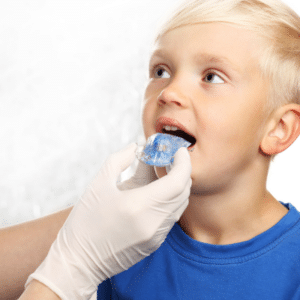 Early Orthodontic treatment has many benefits. An orthodontic consult at an early age can catch future issues and adjust for them before they become problems. Some of these issues include:
- Airway Obstruction: well-developed airways allow normal breathing through the nose when the mouth is closed. While this may sound trivial, nasal breathing is important because it’s now vital to good health. Airway obstruction has been linked to developmental delays, sleep disorders, behavioral disturbances, and later can lead to hypertension, stroke, heart disease and even premature death. These sound scary, but the treatment is easy if we can catch it early on! We all can relate to our little ones that struggle with allergies!
- Crossbites: by age seven, most children’s permanent molars and incisors have come in. A trained eye can see early on if crowding or crossbites will be an issue as the rest of your child’s permanent teeth come in. The earlier treatment begins, the easier it will be because your child’s jaw is less developed at this early age and can be guided along the right path rather than working to reverse issues at a later age.
- Overcrowding: Traditionally, orthodontists would say wait until age 11 or 12 to treat a crowding problem, but the problem will not get any better by waiting. Early treatment has been proven to correct narrow arch and create space for the teeth and the tongue so it may function correctly when swallowing. Plus, early treatment can avoid the need for future tooth extraction or jaw surgery.
The benefits of Early Orthodontic treatment are clear:
- Early treatment can negate or simplify future treatment by:
- Regulating the width of the upper and lower dental arches
- Making space for permanent teeth
- Reducing the need for permanent tooth extractions
- Reducing the likelihood of impacted permanent teeth
- Correcting any habits that can cause bad bite later on
- Eliminate abnormal swallowing or speech problems
Phase 1 works with your young child to make space for their permanent teeth, and phase 2 begins once they’ve arrived. Often children who undergo Phase 1 treatment have a much shorter Phase 2 or may not even need Phase 2 treatment. This makes life easier for both them and you as their schedules get busier and busier.
Not every seven-year-old will need early treatment, but if they need early treatment and if it is caught early on by a trained orthodontist, it could make a big difference in treatment outcomes later. If your child hasn’t seen an orthodontist, talk to your pediatric dentist, and they can help evaluate whether or not you’re ready for braces. One of our pediatric dentist colleagues, Dr. Nanna, from Alpharetta, Georgia, wrote a piece about the right time for braces. Knowing the importance of early orthodontics is only part of the battle. Then the question is, who do you talk to? We at Smiles Orthodontics focus on your child’s individual needs and focus on early Orthodontic treatment to avoid extractions and take advantage of growth!
Early Orthodontics: Contact Us Today
Contact us today for a free consultation! Call us at 316-684-5184.