 A healthy smile starts with early awareness, including recognizing the signs of bite problems in children. Because orthodontic concerns can develop over time, they may not always be easy for parents to spot. At Smiles Orthodontics in Wichita, KS, we encourage parents to learn the early signs your child might need an evaluation, especially when it comes to identifying potential alignment concerns early. These concerns can affect both function and long-term oral health, making early evaluation an important step in protecting your child’s smile.
1. Early or Late Loss of Baby Teeth
The timing of baby tooth loss can provide important clues about orthodontic development. When baby teeth fall out too early or too late, it can disrupt the way permanent teeth come in. This disruption is often one of the earliest signs of bite problems in children, especially when teeth begin erupting in crowded or shifted positions.
Parents who notice irregular tooth loss should consider that it may indicate a developing issue, particularly if permanent teeth appear misaligned.
2. Crowded or Crooked Teeth
Crowding occurs when there’s not enough space in the jaw for teeth to align properly. Teeth may overlap, twist, or grow in at odd angles. Crowding is often visible even in mixed dentition stages and is one of the most noticeable signs of bite problems in children.
When teeth are crowded, it can also make oral hygiene more difficult. In many cases, improper spacing can contribute to bite misalignment and other concerns.
3. Difficulty Biting or Chewing
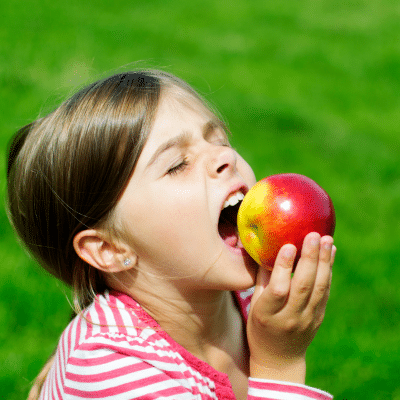
If your child struggles to bite into foods like apples or sandwiches, or avoids chewing on one side, this may signal an alignment issue. Difficulty chewing can be one of the most common signs of bite problems in children, as proper bite alignment plays an important role in how comfortably and efficiently they eat.
When chewing feels uncomfortable or uneven, it may be a strong indicator of an underlying issue that could require evaluation.
4. Jaw Shifting or Misalignment
A properly aligned bite should allow the jaws to open and close smoothly. If your child’s jaw shifts to one side or appears uneven, it may indicate underlying structural concerns. These are classic signs of bite problems in children, especially when the bite does not come together evenly.
Jaw asymmetry or shifting is often one of the more advanced signs, signaling that early evaluation may be beneficial.
5. Mouth Breathing and Oral Habits
Habits such as mouth breathing, thumb sucking, or prolonged pacifier use can influence jaw development. Over time, these habits may affect how the teeth erupt and how the bite forms. If these habits continue beyond early childhood, they can contribute to developing concerns.
These habits, especially when paired with other concerns, can be signs of bite problems in children.
6. Speech Difficulties
Speech development varies from child to child, but persistent speech issues may sometimes be linked to dental alignment. The position of the teeth and jaws can affect how sounds are formed. In some cases, speech difficulties may overlap with concerns, especially when teeth are significantly misaligned.
An orthodontic evaluation can help identify whether speech challenges are linked to signs of bite problems in children or other developmental factors.
7. Protruding or Gapped Teeth
Teeth that protrude or have excessive spacing can indicate underlying alignment or jaw growth issues. Protruding front teeth, in particular, are often among the clearest signs of bite problems in children, as they can indicate how the upper and lower jaws relate to each other.
Spacing issues like gaps are also common signs, especially when the teeth do not fit together properly.
Why Early Evaluation Matters
Early evaluation (often recommended around age 7) helps identify developing issues before they become more complex. At this stage, Dr. Suman Gorantla can observe growth patterns and determine whether treatment is needed now or in the future.
Recognizing the signs of bite problems in children early allows for better planning, potentially simplifying future orthodontic care and improving long-term outcomes.
What Happens During an Evaluation
An evaluation at Smiles Orthodontics is simple and comfortable. Dr. Gorantla examines the teeth, bite and jaw alignment. Digital imaging may be used to assess how permanent teeth are developing.
This process helps identify whether there are any early signs of bite problems in children and whether monitoring or treatment is needed.
Why Families Choose Smiles Orthodontics
Families throughout Wichita, Andover, Derby, Augusta, Eldorado and surrounding communities turn to Smiles Orthodontics for exceptional orthodontic care. Dr. Gorantla’s board certification and advanced training—credentials held by fewer than half of orthodontists nationwide—reflect a dedication to clinical excellence and the latest advancements in treatment. Our team is committed to delivering personalized care and outstanding results for every patient.
A Healthier Smile Starts Early: Request Your Complimentary Consultation Today
Every child develops differently, but early awareness is key. Parents who understand the signs of bite problems in children are better prepared to seek timely orthodontic care.
At Smiles Orthodontics in Wichita, KS, we focus on early detection, education and guidance to ensure every child has the opportunity for a healthy, confident smile that lasts a lifetime. Request your complimentary consultation today!