At your first appointment at Smiles Orthodontics, we will take orthodontic x-rays of your face and teeth. Orthodontic treatment is complex and requires a great deal of care and precision. The orthodontist has to gather as much information as possible about you before beginning the treatment.
Orthodontic treatment requires careful strategic planning. To maximize your results, the orthodontist will have to get a picture of your situation. To do this, they need to see every part of your teeth so that they can visualize how your teeth will move. By analyzing the obstacles and challenges, treatment will be more effective, and you will get a straighter, healthier smile.
Why Not Use The Orthodontic X-rays From The Dentist
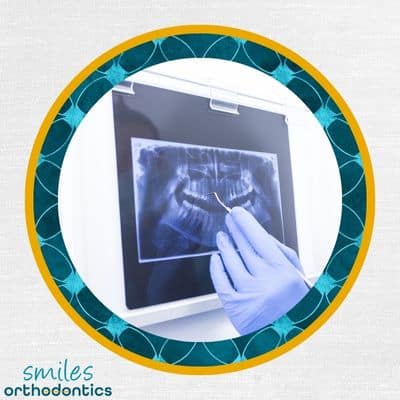
If you have been going to the dentist regularly, you probably have dental X-rays done once a year. The types of X-rays taken in dental and orthodontic offices are different and provide different information. Dental X-rays are limited to diagnose problems like tooth decay and gum disease, whereas orthodontic X-rays assess issues related to the alignment of the teeth and bite problems.
Orthodontic X-rays focus on the form and position of the jaws and teeth. Getting a clear picture of your orthodontic problems is the vital first step in prescribing an accurate treatment plan and getting you on your way to the perfect smile.
What Can The Orthodontist See With X-rays?
These X-rays allow our providers to see:
- Missing or extra teeth – You may have been born missing permanent teeth or even extra ones, which is more common than you think! Your orthodontist can use this information to design your orthodontic treatment to minimize the space.
- Impacted teeth – When you first see the orthodontist, you will have teeth that are hidden and have not fully emerged from underneath the gums. Some of these teeth may be angled to come in crooked or affect nearby teeth. By checking for impacted teeth, the orthodontist can develop a plan for how to handle them.
- Fillings – We don’t always remember where we have fillings in our teeth. X-rays show the orthodontist, and she can develop a plan that is mindful of your vulnerable areas.
- Tooth Decay – Your mouth needs to be in good health before you start orthodontic treatment. If the orthodontist sees tooth decay, she can help you to get the correct treatment before starting orthodontic treatment.
- Jawbone Issues – Your jawbones hold your teeth in place. If your jawbones are not healthy or strong enough for orthodontic treatment, the X-rays will show it. The orthodontist can work with you to decide the best route for treatment and the best way to get excellent results despite the challenges.
- Infection – If you have an infection in your mouth, orthodontics can be dangerous. If the X-rays show that you have one, your orthodontist can provide treatment to help you heal and get well before you start orthodontic treatment.
- Advanced Diseases – Diseases such as gum disease make orthodontics challenging. By finding them early, the orthodontist can help you get the correct treatment before starting orthodontic treatment.
- Oral Cancers or Tumors – Although rare, if you have cancer or tumors, these need to be addressed for your overall health. You may have to take certain precautions and undergo certain procedures before orthodontic treatment.
Two More Things About Orthodontic X-rays
- Are X-rays Dangerous? No. Although X-rays do expose you to radiation, the amount of radiation emitted by an X-ray machine is less than you can expect to encounter during an airplane ride, and experts agree that the benefits outweigh the risks.
- Sometimes You Will Have More X-rays During Treatment. Periodically during orthodontic treatment, your orthodontist may request additional X-rays to help measure the progress made. These X-rays allow the ortho to know that everything is progressing the way it should be.
Ready For Treatment?
Schedule a complimentary consultation at Smiles Orthodontics online or call (316) 684-5184. We look forward to seeing you!